
Montessori Is Not About Wooden Toys
Montessori Is Not About Wooden Toys
What one cylinder block reveals about choice, control of error, and the role of the adult
What do you notice first?
What do you notice first?
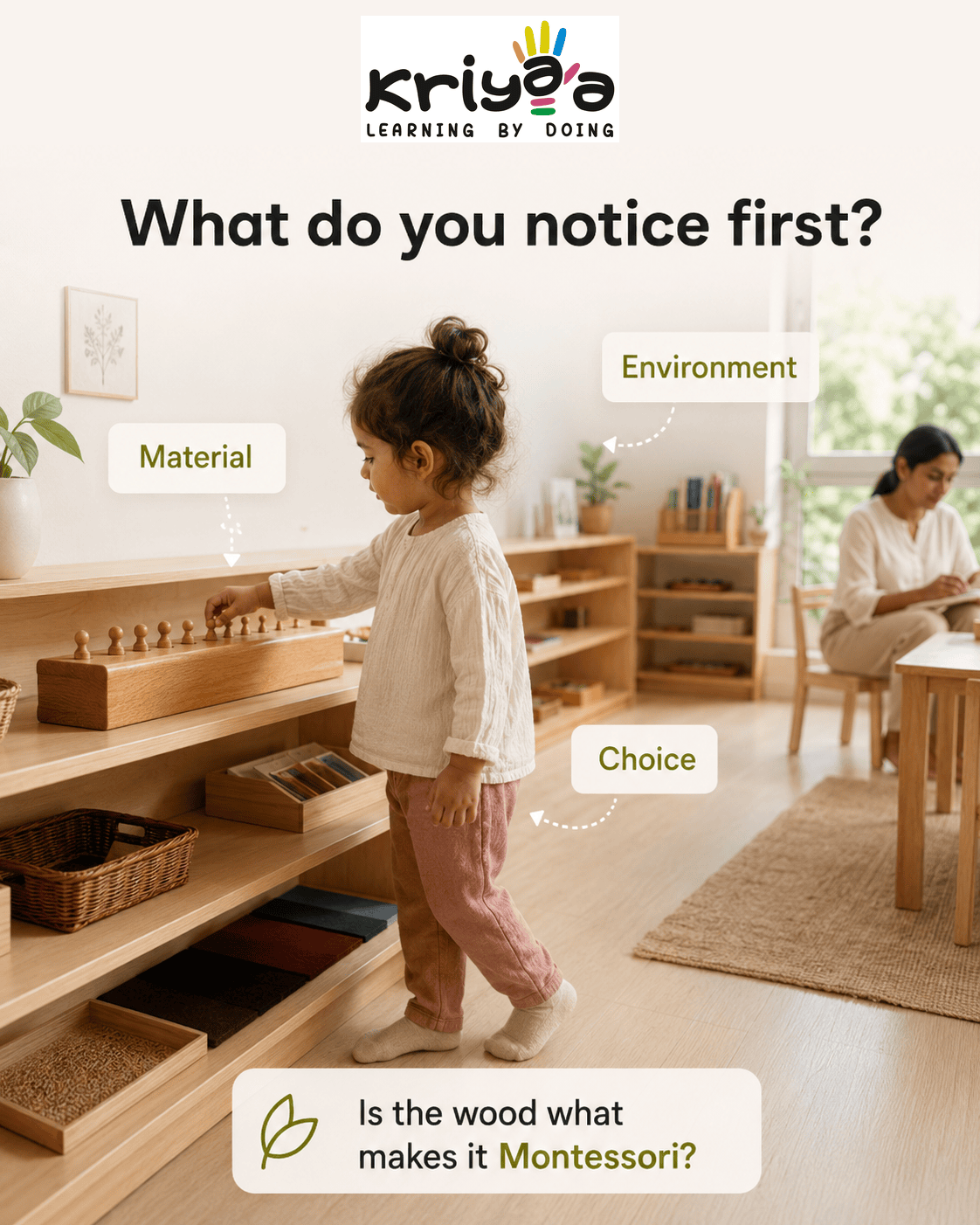
Walk into a Montessori classroom and the wooden materials may be the first feature you see. They are orderly, precise, and visually distinctive. But wood alone does not make an environment Montessori. AMI is explicit that anyone can buy or make the materials; what matters is the wider system in which the child, prepared adult, material, and prepared environment work together.
1. The environment makes meaningful choice possible
1. The environment makes meaningful choice possible
Materials are displayed on low, accessible shelves so children can see them, select work they know how to use, and carry it to an appropriate workspace. This is not unlimited choice. It is freedom within a deliberately prepared environment, with clear social and practical limits
2. The adult presents with precision
2. The adult presents with precision
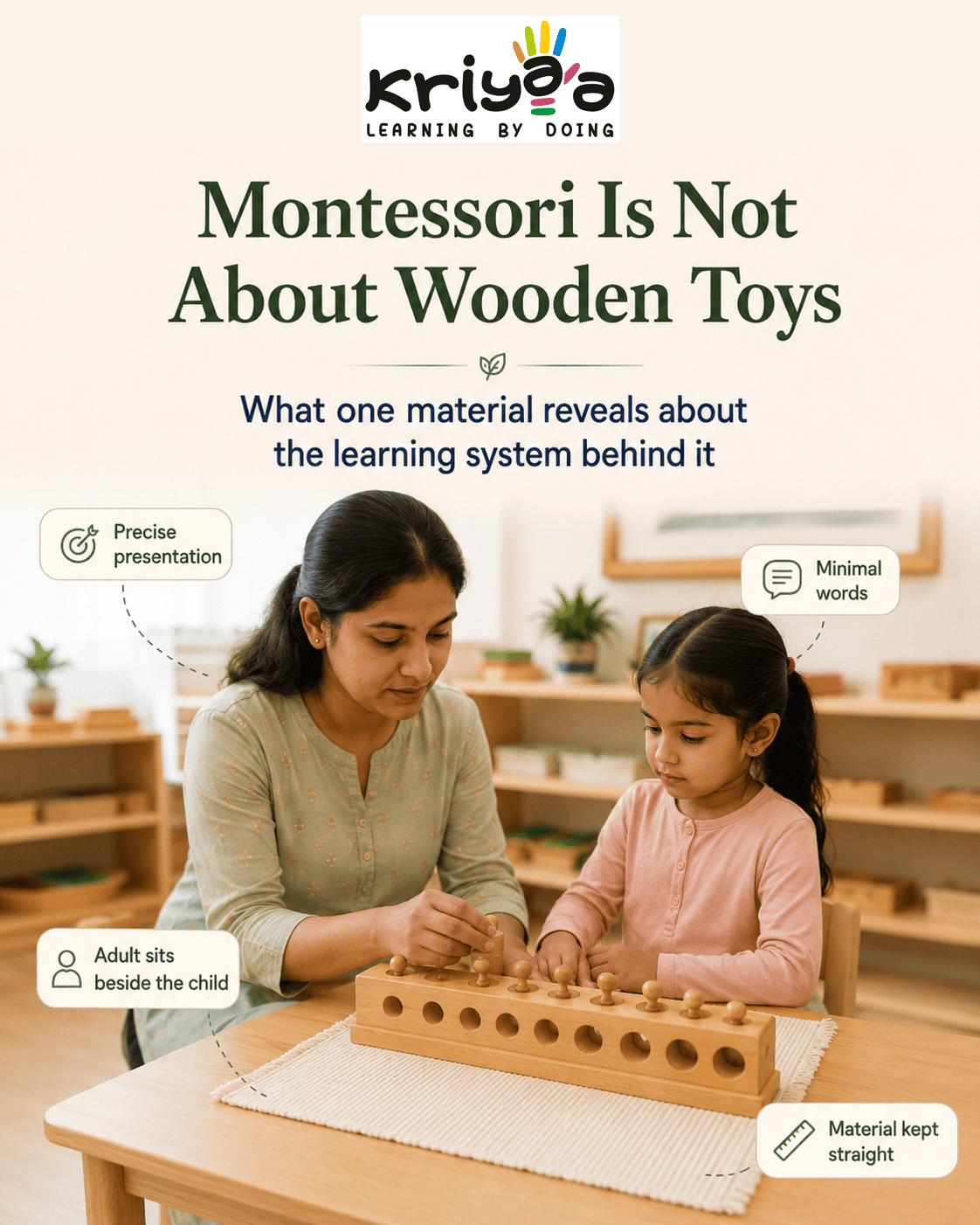
Before independent work, the Montessori guide may offer a presentation: a slow, exact demonstration, step by step, with minimal words. The cylinder block is kept straight and stable, aligned neatly with the table or mat. The adult sits beside the child so both share the same orientation to the material. The presentation shows only what is necessary for active engagement.
3. The child becomes the active learner
3. The child becomes the active learner
After the presentation, the adult observes rather than continuously directing. The child handles the cylinders, compares dimensions, tests possibilities, and works at an individual pace. The adult remains attentive and intervenes with restraint and purpose - for example, by planning a later re-presentation if observation shows that support is needed.
4. The material provides control of error
4. The material provides control of error
Many Montessori materials include a control of error. In the cylinder block, placing a cylinder in the wrong socket can leave another cylinder unable to fit. The mismatch is visible and mechanical. The child can notice it, compare the remaining pieces, and adjust independently. Error becomes information rather than a moment of adult judgement.
5. Repetition may deepen concentration
5. Repetition may deepen concentration
When purposeful work matches a child's interest and readiness, the child may choose to repeat it. Repetition is not forced. It gives the child opportunities to refine movement, discrimination, order, and attention. AMI describes the uninterrupted work cycle as a protected period in which meaningful choice and self-paced activity can foster deep concentration.
6. The work ends with restoration
6. The work ends with restoration
Completing the activity includes restoring the cylinders, carrying the block carefully, and returning it to its exact place on the shelf. This is not simply tidying. It preserves order, makes the material ready for another child, and connects individual independence with responsibility to the community.
What this means for our community
What this means for our community
Parents can look beyond attractive materials and observe what the child is actually enabled to do. Educators can reflect on the quality of presentation, observation, and restraint. School leaders can examine whether trained adults, authentic materials, an accessible environment, and protected work time operate as one coherent system.
The Kriyaa perspective
The Kriyaa perspective
At Kriyaa, we look beyond labels and visible features. We study the principles behind educational traditions and ask how they shape children's lived experiences. The wood is visible. The education lies in the design, the use, the relationship, and the learning behaviour made possible.
 +91 88008 70177